Introduction
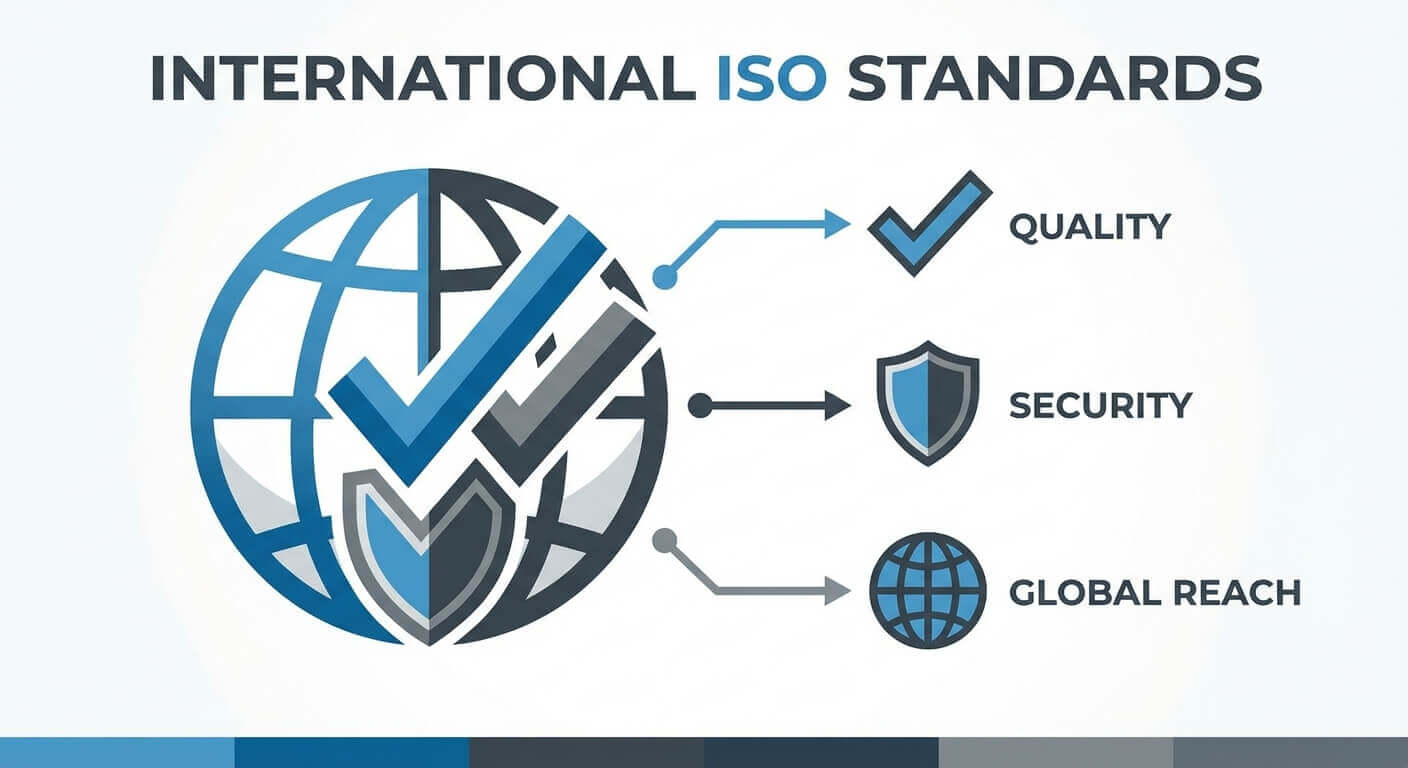
In a competitive global marketplace, how do you signal to potential clients that your business is a benchmark for quality, security, and reliability? While you can tell them you’re the best, an international standard speaks volumes on your behalf. This is where the International Organization for Standardization (ISO) comes in. For many marketing directors and business owners, the term “”ISO certified”” sounds impressive but abstract. You might wonder if it’s relevant for your business or just for large industrial corporations. This article will demystify the world of ISO certifications. We’ll explore what they are, the tangible benefits they offer, the most common standards for modern businesses, and the practical steps to achieving certification. By the end, you’ll have a clear understanding of how these powerful standards can become a cornerstone of your business strategy.
What Exactly Are ISO Certifications?
First, let’s clear up a common misconception. The International Organization for Standardization (ISO) is an independent, non-governmental international body that develops and publishes standards. However, ISO itself does not “”certify”” organizations. Instead, certification is carried out by external, accredited certification bodies. Think of ISO as the creator of a world-class recipe for business excellence. The certification body is the expert judge who verifies that you’ve followed the recipe to the letter.
These standards provide a framework and a set of principles that ensure products, services, and systems are safe, reliable, and of high quality. They are the distilled wisdom of experts from all over the world. When your business adheres to an ISO standard, you are implementing processes that are globally recognized for their effectiveness. It’s a strategic commitment to operating at an elite level, ensuring consistency and a systematic approach to managing your business.
Why Should Your Business Care About ISO? Key Benefits
Pursuing an ISO certification isn’t just about earning a certificate to hang on the wall. It’s a strategic business decision that can yield significant returns on investment and provide a powerful marketing advantage. As a business leader, understanding these benefits is key to seeing the true value.
- Increased Credibility and Trust: An ISO certification is an impartial endorsement of your commitment to quality. It instantly builds trust with potential clients, partners, and stakeholders, assuring them that your business operates according to a globally recognized standard. For marketing directors, this is a powerful asset to leverage in campaigns and proposals.
- Improved Processes and Efficiency: The journey to certification forces you to critically examine, document, and streamline your business processes. This often reveals inefficiencies, redundancies, and areas for improvement. The result is less waste, better consistency, and smoother operations, which translate directly to cost savings.
- Enhanced Customer Satisfaction: The core of many ISO standards, particularly ISO 9001, is a focus on meeting and exceeding customer expectations. By implementing a structured quality management system, you ensure consistent delivery of your product or service, leading to fewer complaints and greater customer loyalty.
- Access to New Markets: Many government tenders and contracts with large corporations, especially in international markets, are only open to certified suppliers. Holding an ISO certification can unlock revenue streams and markets that would otherwise be inaccessible, turning it into a passport for global trade.
- Reduced Risk: Standards like ISO 27001 for information security or ISO 45001 for health and safety provide a robust framework for identifying and mitigating risks. In a world of increasing data breaches and regulatory scrutiny, proving you have a system to manage these risks is invaluable.
Common ISO Certifications for Modern Businesses
While there are thousands of ISO standards, a few are particularly relevant for small and medium-sized businesses today. Choosing the right one depends entirely on your industry and strategic goals.
- ISO 9001: Quality Management: This is the world’s most recognized standard, applicable to any organization of any size. It provides a framework for a Quality Management System (QMS). An SMB that implements ISO 9001 might, for example, create a system to track customer feedback, leading to data-driven product improvements and higher satisfaction rates.
- ISO/IEC 27001: Information Security Management: In our digital-first economy, protecting data is non-negotiable. ISO 27001 helps you establish, implement, and maintain an Information Security Management System (ISMS). For a marketing agency, this certification proves to clients that their sensitive campaign data, customer lists, and strategic plans are protected against breaches.
- ISO 14001: Environmental Management: As consumers and regulators demand greater corporate sustainability, ISO 14001 provides a framework for an effective Environmental Management System (EMS). A company might use it to systematically reduce its energy consumption, manage waste more effectively, and ensure compliance with environmental regulations.
- ISO 45001: Occupational Health and Safety: This standard focuses on creating a safe and healthy workplace. By implementing ISO 45001, a business can proactively prevent work-related injuries and illnesses, demonstrating a profound commitment to its employees’ well-being.
The Path to Certification: A Step-by-Step Guide
The process of getting certified is a marathon, not a sprint, but it can be broken down into manageable phases. A methodical approach is crucial for success.
- Step 1: Choose Your Standard & Define Scope: Based on your business goals—whether it’s improving quality, securing data, or accessing new markets—select the most appropriate ISO standard. Then, define the scope of the certification. Will it apply to the entire organization or just a specific department or product line?
- Step 2: Perform a Gap Analysis: Before you start building, you need a blueprint. A gap analysis involves comparing your existing processes and procedures against the requirements of the chosen ISO standard. This critical step identifies what you already have in place and what is missing.
- Step 3: Implementation and Documentation: This is the most intensive phase. You will need to develop new processes, write policies, and create detailed documentation to fill the gaps identified. Crucially, you must also train your team on these new procedures. Success here hinges on getting buy-in from all levels of the organization.
- Step 4: Conduct an Internal Audit: Before calling in the external auditors, you need to check your own work. An internal audit is a dress rehearsal for the main event. It helps identify any non-conformities or areas of weakness in your new system, giving you a chance to correct them.
- Step 5: Select an Accredited Certification Body: Not all auditors are created equal. It’s vital to choose a reputable, accredited certification body. You can find a list of accredited bodies through organizations like the ANSI National Accreditation Board (ANAB) in the United States.
- Step 6: The Certification Audit: This is typically a two-stage process. Stage 1 is a documentation review, where the auditor checks if your written procedures meet the standard. Stage 2 is the main audit, where the auditor visits your premises to observe your processes in action and interview your team to ensure you are following your own documented system.
- Step 7: Certification and Continual Improvement: If you successfully pass the audit, you are awarded the certification, which is typically valid for three years. However, the work doesn’t stop. You will undergo annual surveillance audits to ensure you continue to maintain and improve your system. ISO is about fostering a culture of continual improvement, not just passing a one-time test.
ISO Certifications in Action: Real-World Scenarios
Let’s consider two scenarios to make this more concrete:
- Scenario 1: A B2B SaaS Company. A growing SaaS company wants to land enterprise-level clients, but their sales cycle stalls when corporate procurement teams ask about data security protocols. By achieving ISO 27001 certification, the company can provide third-party validation of its robust information security system. This removes a major sales obstacle and becomes a key differentiator in their marketing, helping them win larger, more lucrative contracts.
- Scenario 2: A Boutique Manufacturing Firm. A specialized manufacturer is struggling with inconsistent product quality, leading to costly waste and returns. They decide to pursue ISO 9001. The process forces them to document every step of their production line, implement quality checkpoints, and establish a system for tracking and addressing defects. Within a year, they reduce defects by 25% and improve on-time delivery, boosting both profitability and customer loyalty.
Conclusion: Your Next Step Towards Excellence
For ambitious marketing directors and business owners, understanding ISO certifications is about recognizing a powerful tool for building a more resilient, efficient, and trusted brand. This is not about bureaucratic red tape; it’s a strategic framework for achieving business excellence. An ISO certification serves as an international language of quality, opening doors to new markets and cementing your reputation with customers.
By taking the time to understand the process and benefits, you can make an informed decision about how these standards can fuel your company’s growth. The journey requires commitment, but the rewards—in credibility, efficiency, and market access—are undeniable.
Ready to explore if an ISO certification is the right next step for your business? Download our free ‘ISO Readiness Checklist’ or subscribe to our monthly newsletter for more expert insights on building a world-class business.
”